Sunday, September 16, 2007

Gates rejects Greenspan claim war is about oil

By Thomas Ferraro 1 hour, 29 minutes ago

WASHINGTON (Reuters) - U.S. Defense Secretary Robert Gates on Sunday rejected former Federal Reserve Chairman Alan Greenspan's statement that the Iraq war "is largely about oil."

With Democratic lawmakers apparently short of the votes needed to force President George W. Bush to change course, Gates defended the war, now in its fifth year, and said it's being driven by the need to stabilize the Gulf and put down hostile forces.

Gates's defense came a day after thousands of anti-war protesters marched in Washington. A spokeswoman for one of the groups who organized the march said more than 200 protesters were taken into custody, including at least 10 Iraq war veterans, when they attempted to cross a police barrier near the U.S. Capitol.

Greenspan, in his new book, "The Age of Turbulence: Adventures in a New World," echoed long-held complaints of many critics that a key motivating force in the war is to maintain U.S. access to the rich oil supplies in Iraq.

"Whatever their publicized angst over Saddam Hussein's 'weapons of mass destruction,' American and British authorities were also concerned about violence in an area that harbors a resource indispensable for the functioning of the world economy," Greenspan wrote.

"I'm saddened that it is politically inconvenient to acknowledge what everyone knows: The Iraq war is largely about oil," added Greenspan, who for decades had been one of the most respected U.S. voices on fiscal policies.

After more than 18 years at the helm, Greenspan retired in January 2006 as chairman of the Fed, the nation's central bank, which regulates monetary policy.

Appearing on ABC's "This Week," Gates said, "I have a lot of respect for Mr. Greenspan." But he disagreed with his comment about oil being a leading motivating factor in the war.

"I wasn't here for the decision-making process that initiated it, that started the war," Gates said. But he added, "I know the same allegation was made about the Gulf War in 1991, and I just don't believe it's true."

"I think that it's really about stability in the Gulf. It's about rogue regimes trying to develop weapons of mass destruction. It's about aggressive dictators," Gates said.

"After all, Saddam Hussein launched wars against several of his neighbors," Gates said. "He was trying to develop weapons of mass destruction, certainly when we went in, in 1991."

Bush last week ordered gradual troop reductions in Iraq into next summer but defied calls for a dramatic change of course, saying the U.S. military role there will stretch beyond his presidency.

Gates said he would urge Bush to veto a proposal by Democratic Sen. James Webb of Virginia that would require U.S. troops spend as much time at home as their previous tour in Iraq.

"It would be extremely difficult for us to manage that," Gates said. "It really is a backdoor way to try and force the president to accelerate the drawdowns. Again, the drawdowns have to be based on the conditions on the ground."

Senate Armed Services Committee Chairman Carl Levin, a Michigan Democrat, said he did not know if the Senate, held by Democrats, 51-49, would be able to muster the 60 votes needed to clear a Republican procedural roadblock and approve the Webb measure. But he said "it has a good chance."

He conceded, however, that at this point backers do not have the two-thirds majority that would be needed to override a Bush veto of the legislation.

"But that doesn't mean we shouldn't fight for what we believe in just because the president may veto it," Levin said on CBS's "Face the Nation."

"I think there's enough Republicans who believe we've got to change course but whether they'll vote that way, we just simply don't know," Levin said.

(Additional reporting by David Wiessler, Mark Felsenthal and Doug Palmer)

Thursday, September 13, 2007

A pub turns into club

McKinney: The Londoner got around loss of alcohol license
12:00 AM CDT on Thursday, September 13, 2007
By ROY APPLETON / The Dallas Morning News
rappleton@dallasnews.com

McKINNEY – Order and purpose have returned to 100 N. Tennessee St. All again goes with the flow.

REX C. CURRY/Special Contributor
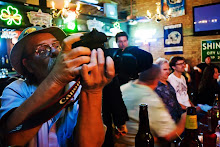
An outpouring of public support helped the Londoner become a private club, where patrons must be members.

For as the banner flying Tuesday over McKinney put it: "The Londoner Is Open!!"

Three months after losing its state license to sell alcoholic beverages, the popular pub is back as a private club – with a little help from some friends.

Since its opening four-plus years ago, the place has become a gathering spot and energy hub for downtown McKinney, creating some night life and, as alcohol sources can do, occasionally some work for police.

It has drawn a loyal following (as well as a Guinness and more) with its fish and chips, dartboards, jukebox and mother-country public house look and feel.

"You walk in here a stranger, and by the end of the night you've got a roomful of friends," said Lucy Parker Watkins, a regular who often brings her two daughters in for meals and playful company.

And in recent months, an outpouring of public support has helped the pub through dry and uncertain times.

In May 2004, McKinney voters decided restaurants could sell mixed drinks and other alcoholic beverages, as long as alcohol sales provide no more than half of their revenue.

But in June, the Texas Alcoholic Beverage Commission declined to renew the Londoner's mixed-drink permit after the business attributed 61 percent of its previous year's revenue to alcohol.

Facing a yearlong wait to reapply for the permit, the pub's owner applied to sell alcohol as a private club.

For a spell, the restaurant gave away beer and wine to keep its spirit alive – a short-lived offer that became too popular and costly. Loyalists' appetites and tips helped keep the doors open, as did profits from the Londoner's sister pub in Addison. Some employees hung in with pay cuts.

And when the city staff opposed the Londoner's private club plan, its die-hards responded with signs, petitions and words of support to the City Council.

Besides a state license, McKinney also requires that private clubs obtain a council-approved specific-use permit.

The city planning staff recommended denial of the Londoner's permit because of "general concern over the number and severity of police calls" there, said Melissa Henderson, city planning director.

Since 2005, McKinney police have responded to 10 alcohol-related disturbances inside or near the Londoner, including five cases of public intoxication and three fights, said Capt. Randy Roland, a police spokesman.

"It's the type of calls we were seeing that caused concern," he said, explaining why Police Chief Doug Kowalski proposed denial of the permit.

"They were acting like a bar. That's why they lost their state license," Capt. Roland said. "Our attempt was to raise the red flag. ... The chief said we'd rather not have bars, but if you want them, we'll police them."

Any problem or police call is unfortunate, said Barry Tate, the Londoner's Texas-born, England-bred general manager. But trouble can happen wherever alcohol is served, he said, particularly after 9 p.m.

"You can't watch everyone," he said. Still, 10 disturbances in going on three years are, relatively speaking, "nothing," he said.

As the Londoner's request came to a head, about 750 people signed a petition supporting it. Some posted storefront signs or praised the Londoner before the council and its advisory planning and zoning commission.

And after the council's unanimous OK on Sept. 4, adult beverages returned to the two-story brick building, circa 1890, at the southeast corner of the square.

"We can't thank them enough for what they've done," Marie Briton, the Londoner's manager, said of the pub's champions, who won't see much change in the revived operation.

State law requires that a private club's patrons be members of the establishment. But the serving of alcoholic beverages is otherwise no different than at other types of bars or restaurants. And the city permit now requires that the Londoner derive at least 35 percent of its revenues from food sales.

"We just have to scan the driver's license and they are a member for a year," said Ms. Briton, who, like her boss, is a transplant from England.

Mayor Bill Whitfield said he welcomed the Londoner's public show of support but added that the council probably would have supported the pub anyway.

"I don't think the picture is as bad" as presented, the mayor said, of the police department's concerns.

The Londoner "serves a purpose," he said, in helping enliven a city core that has been rich in antique, clothing and knickknack shops – but now includes a broadening array of restaurants and 12 businesses selling alcoholic beverages.

"It's a meeting place, a place you know you can find people," said Gerhard Deffner, a downtown resident who pulled the Londoner banner behind his airplane this week.

Several downtown merchants said worries about fights and drunks are overblown.

"There is no bar atmosphere" downtown, said Brian Keffer, manager of Landon Winery at the southwest corner of the square.

"They are bringing in diversity," he said of the Londoner. "The city should approve."

Some days you get up and ask yerself: "Is this really the good life?"


The obvious answer is "prolly not!"

Wednesday, September 12, 2007

Oil hits record $80 on tight supply
Wed Sep 12, 2007 2:14 PM EDT

(Page 1 of 2)

By Richard Valdmanis
NEW YORK (Reuters) - Crude oil prices vaulted to a record high $80 a barrel on Wednesday as dealers focused on tight inventories in top consumer the United States ahead of peak winter demand.

A rash of fires at BP's oil fields in Alaska's North Slope added to the record run, though BP said the accidents had minimal impact to production that was already being curtailed by routine maintenance.

The surge in oil prices came a day after OPEC agreed to a small production hike in an effort to soothe consumer nations' fears that soaring crude costs could slow economic growth.

"The OPEC outcome was not enough of a shocker to turn around a market that likes to read extremes," said Olivier Jakob of oil consultancy Petromatrix.

U.S. light crude for October delivery was up $1.59 at $79.82 per barrel at 2:07 p.m. EDT after setting a record high of $80.00 a barrel earlier. London Brent crude was up $1.35 at $77.73 a barrel.

Crude oil stocks in top consumer the United States fell 7.1 million barrels last week to their lowest level in eight months ahead of the winter heating season, according to the U.S. Energy Information Administration.

Analysts had expected a fall of 2.4 million barrels.

"The reality is that the crude tightness in Europe and Asia has begun to affect the U.S. market in a big way," said Antoine Halff, analyst at Fimat Research in New York. "In retrospect, it validates OPEC's decision to increase production."

Heating oil futures prices also struck a record Wednesday of $2.2139 a gallon, up 3.12 cents.

Experts said OPEC's deal in Vienna Tuesday to raise output by a half a million barrels per day starting November 1 was not enough to reverse rising energy prices.

"It legitimises the excess production that was there relative to OPEC's previous implied quota and not much more," said Harry Tchilinguirian, senior oil market analyst at BNP Paribas. Continued ...
http://ca.today.reuters.com/news/new...archived=False

Tuesday, September 11, 2007

Senate votes to ban Mexican trucks


By SUZANNE GAMBOA, Associated Press Writer
1 hour, 33 minutes ago


The Senate voted Tuesday to ban Mexican trucks from U.S. roadways, rekindling a more than decade-old trade dispute with Mexico.


By a 74-24 vote, the Senate approved a proposal by Sen. Byron Dorgan, D-N.D., prohibiting the Transportation Department from spending money on a North American Free Trade Agreement pilot program giving Mexican trucks access to U.S. highways.


The proposal is part of a $106 billion transportation and housing spending bill that the Senate hopes to vote on later this week. The House approved a similar provision to Dorgan's in July as part of its version of the transportation spending bill.


Supporters of Dorgan's amendment argued the trucks are not yet proven safe. Opponents said the U.S. is applying tougher standards to Mexican trucks than to Canadian trucks and failing to live up to its NAFTA obligations.


Until last week, Mexican trucks were restricted to driving within a commercial border zone that stretched about 20 miles from the U.S.-Mexican boundary, 75 miles in Arizona. One truck has traveled deep into the U.S. interior as part of the pilot program.


Blocking the trucks would help Democrats curry favor with organized labor, an important ally for the 2008 presidential elections.


"Why the urgency? Why not stand up for the (truck) standards that we've created and developed in this country?" Dorgan asked.


Sen. John Cornyn, R-Texas, who drafted a Republican alternative to Dorgan's amendment, said the attempt to block the trucks appeared to be about limiting competition and may amount to discrimination against Mexico.


"I would never allow an unsafe truck on our highways, particularly Texas highways," he said.


Under NAFTA, Mexico can seek retaliation against the U.S. for failing to adhere to the treaty's requirements, including retaining tariffs on goods that the treaty eliminates, said Sidney Weintraub, a professor emeritus at the University of Texas LBJ School of Public Affairs in Austin.


The trucking program allows up to 100 Mexican carriers to send their trucks on U.S. roadways for delivery and pickup of cargo. None can carry hazardous material or haul cargo between U.S. points.


So far, the Department of Transportation has granted a single Mexican carrier, Transportes Olympic, access to U.S. roads after a more than decade-long dispute over the NAFTA provision opening up the roadways.


One of the carrier's trucks crossed the border in Laredo, Texas last week and delivered its cargo in North Carolina on Monday and was expected to return to Mexico late this week after a stop in Decatur, Ala.


The transportation bill is S. 1789.


http://news.yahoo.com/s/ap/20070911/...nS kmJ_eMwfIE


We had a parade in downtown this afternoon...fair number of folks came out to enjoy it...


Monday, September 10, 2007

Here is an interesting position...


Are the banks in trouble?

Are the banks in trouble?

By Mike Whitney
Online Journal Contributing Writer


Sep 10, 2007, 01:25

Email this article
Printer friendly page

“The new capitalist gods must love the poor -- they are making so many more of them.” Bill Bonner, “The Daily Reckoning”

“The hope of every central bank is that the real problem can be kept from public view. The truth is that the public -- even professionals on Wall Street -- have no clue what the real problem is. They know it has something to do with derivatives, but none of them realize that it’s more than a $20 trillion mountain of unfunded, unregulated paper that has just been discovered to not have a market and, therefore, no real value . . . When the dollar realizes the seriousness of the situation -- be that now or sometime soon -- the bottom will drop out.” --Jim Sinclair, Investment analyst

About a month ago, I wrote an article “Stock Market Brushfire: Will there be a run on the banks?” which showed how the collapse in the housing market and the deterioration in mortgage-backed bonds (CDOs) in the secondary market was creating difficulties for the banking system. Now these problems are becoming more apparent.

From the Wall Street Journal: “The rising interbank lending rates are a proxy of sorts for the increased risk that some banks, somewhere, may go belly up.” (Editorial; WSJ, 9-6-07)

Ironically, the WSJ editorial staff -- which normally defends deregulation and laissez faire economics "tooth-n-nail" -- is now calling for regulators to make sure they are “on top of the banks they are supposed to be regulating, so we don’t get any surprise bank failures that spook the markets and confirm the worst fears being whispered about.”

“Surprise bank failures?”

Henry Liu sums it up like this in his article, "The Rise of the non-bank system" -- required reading for anyone who wants to understand why a stock market crash is imminent: “Banks worldwide now reportedly face risk exposure of US$891 billion in asset-backed commercial paper facilities (ABCP) due to callable bank credit agreements with borrowers designed to ensure ABCP investors are paid back when the short-term debt matures, even if banks cannot sell new ABCP on behalf of the issuing companies to roll over the matured debt because the market views the assets behind the paper as of uncertain market value.

"This signifies that the crisis is no longer one of liquidity, but of deteriorating creditworthiness system-wide that restoring liquidity alone cannot cure. The liquidity crunch is a symptom, not the disease. The disease is a decade of permissive tolerance for credit abuse in which the banks, regulators and rating agencies were willing accomplices." (Henry Liu,”The Rise of the Non-bank System,” Asia Times)

That's right; nearly $1 trillion in worthless paper is clogging the system, putting the kibosh on the big private equity deals and spreading panic through the money markets. It's a slow-motion train wreck and there's not a thing the Fed can do about it.

This isn't a liquidity problem that can be fixed by lowering the Fed's fund rate and creating more easy credit. This is a solvency crisis; the underlying assets upon which this world of "structured finance" is built have no established market value, therefore -- as Jim Sinclair suggests -- they're worthless. That means that the trillions of dollars which have been leveraged against these shaky assets -- in the form of credit default swaps (CDSs) and numerous other bizarre-sounding derivatives -- will begin to cascade down wiping out trillions in market value.

How serious is it? Economist Liu puts it like this: "Even if the Fed bails out the banks by easing bank reserve and capital requirements to absorb that massive amount, the raging forest fire in the non-bank financial system will still present finance capitalism with its greatest test in eight decades."

Overview

Credit standards are tightening and banks are increasingly reluctant to lend money to each other not knowing who may be sitting on billions of dollars in toxic mortgage-backed debt. (Collateralized debt obligations) It makes no difference that the “underlying economy is sound” as Bernanke likes to say. When banks hesitate to lend money to each other; it shows that there is real uncertainty about the solvency of the other banks. It slows down commerce and the gears on the economic machine begin to rust in place.

The banks' woes have been exacerbated by the flight of investors from money market funds, many of which are backed by Mortgage-backed Securities (MBS). Wary investors are running for the safety of US Treasuries even though yields that have declined at a record pace. This is causing problems in the Commercial Paper market as well as for the lesser known SIVs and “conduits.” These abstruse sounding investment vehicles are the essential plumbing that maintains normalcy in the markets. Commercial paper is a $2.2 trillion market. When it shrinks by more than $200 billion -- as it has in the last three weeks -- the effects can be felt through the entire system.

The credit crunch has spread across the whole gamut of commercial paper and low-grade debt. Banks are hoarding cash and refusing loans to even creditworthy applicants. The collapse in subprime loans is just part of the story. More than 50 percent of all mortgages in the last two years have been unconventional loans -- no down payment, no verification of income, “no doc,” interest-only, negative amortization, piggyback, 2-28s, teaser rates, adjustable rate mortgages (ARMs). All of these reflect the shoddy lending standards of the past few years and all are contributing to the unprecedented rate of defaults. Now the banks are holding $300 billion of these "unmarketable" mortgage-backed CDOs and another $200 billion in equally-suspect CLOs. (Collateralized loan obligations; the CDOs corporate-twin).

Even more worrisome, the large investment banks have myriad “off-book” operations which are in distress. This has forced the banks to circle the wagons and reduce their issuance of loans, which is accelerating the downturn in housing. Typically, housing bubbles unwind very slowly over a five- to 10-year period. That won’t be the case this time. The surge in inventory, the financial distress of many homeowners and the complete breakdown in loan-origination (due to the growing credit crunch) ensures that the housing market will crash-land sometime in late 2008 or early 2009. The banks are expected to write-off a considerable portion of their CDO-debt at the end of the 3rd quarter rather than keep the losses on their books. This will further hasten the decline in housing prices.

The banks are also suffering from the sudden sluggishness in leveraged buyouts (LBOs). Credit problems have slowed private equity deals to a dribble. In July, there were $579 billion in LBOs. In August, that number shrank to a paltry $222 billion. In September, those figures will deteriorate to double digits. The big deals aren’t getting done and debt is not rolling over. More than $1 trillion in debt will have to be refinanced in the next five weeks. In the present climate, that doesn’t look likely. Something’s has got to give. The market has frozen and the Fed’s $60 billion repo-lifeline has done nothing to help.

In the first seven months of 2007, LBOs accounted for “$37 of every $100 spent on deals in the US.”

Thirty-seven percent! How will the financial giants make up for the windfall profits that these deals generated?

Answer: They won’t. Just as they won’t make up for the enormous origination fees they made from “securitizing” mortgages and selling them off to credulous pension funds, insurance companies and foreign banks.

As Steven Rattner of DLJ Merchant Banking said, “It’s become nearly impossible to finance a private equity transaction of over $1 billion.” (WSJ) The Golden Era of Acquisitions and Mega-mergers is coming to an end. We can expect that the financial giants will probably follow the same trajectory as the dot-coms following the 2001 NASDAQ rout.

The investment banks are also facing enormous potential losses from liabilities that “operate off their balance sheets” In David Reilly’s article, “Conduit Risks are hovering over Citigroup” (WSJ 9-5-07), Reilly points out that “banks such as Citigroup Inc. could find themselves burdened by affiliated investment vehicles that issue tens of billions of dollars in short-term debt known as commercial paper . . . Citigroup, for example, owns about 25 percent of the market for SIVs, representing nearly $100 billion of assets under management. The largest Citigroup SIV is Centauri Corp., which had $21 billion in outstanding debt as of February 2007, according to a Citigroup research report. There is no mention of Centauri in its 2006 annual filing with the Securities and Exchange Commission.

"Yet some investors worry that if vehicles such as Centauri stumble, either failing to sell commercial paper or suffering severe losses in the assets it holds, Citibank could wind up having to help by lending funds to keep the vehicle operating or even taking on some losses."

So, many investors don’t know that Citigroup could be holding the bag for “$21 billion in outstanding debt”? Or, perhaps, the entire $100 billion is red ink; who knows? (Citigroup’s stock dropped by more than 2 percent after this report appeared in the WSJ.)

Another report, which appeared in CNN Money, further adds to the suspicion that the banks’ “brokerage affiliates” may be in trouble: “The Aug. 20 letters from the Fed to Citigroup and Bank of America state that the Fed, which regulates large parts of the U.S. financial system, has agreed to exempt both banks from rules that effectively limit the amount of lending that their federally-insured banks can do with their brokerage affiliates. The exemption, which is temporary, means, for example, that Citigroup's Citibank entity can substantially increase funding to Citigroup Global Markets, its brokerage subsidiary. Citigroup and Bank of America requested the exemptions, according to the letters, to provide liquidity to those holding mortgage loans, mortgage-backed securities, and other securities . . . This unusual move by the Fed shows that the largest Wall Street firms are continuing to have problems funding operations during the current market difficulties.” (CNN Money)

Does this mean that the other large banks are involved in the same type of “hide-n-seek” strategies? Sounds a lot like Enron’s “off-the-books” shenanigans, doesn’t it?

Wall Street Journal: “'Any off-balance-sheet issues are traditionally poorly disclosed, so to some extent, you're dependent on the insight that management is willing to provide you and that, frankly, is very limited,' says Mark Fitzgibbon, director of research at Sandler O'Neill & Partners. ' . . . Accounting rules don’t require banks to separately record anything related to the risk that they will have to loan the entities money to keep them functioning during a markets crisis. . . . The vehicles [SIVs and conduits] are often established in a tax haven and are run solely for investment purposes as opposed to typical corporate activities.'”

Still think the banks are on solid ground?

“Citigroup, the nation's largest bank as measured by market value and assets. Its latest financial results showed that it administers off-balance-sheet, conduit vehicles used to issue commercial paper that have assets of about $77 billion.

"Citigroup is also affiliated with structured investment vehicles, or SIVs that have 'nearly $100 billion' in assets, according to a letter Citigroup wrote to some investors in these vehicles last month.” (IBID)

Yes, and how many of these “assets” are in fact corporate debt, auto loans, credit card debt, and student loans that have been securitized and are now under extreme pressure in a slumping market?

In an “up market” loans can provide a valuable income stream that transforms someone else’s debt into a valuable asset. In a "down market," however, defaults can wipe out trillions in market capitalization overnight.

How did we get into this mess?

More than 20 years of dogged lobbying from the financial industry paid off with the repeal of the Glass-Steagall Act, which was passed by Congress following the 1929 stock market crash. The bill was written to limit the conflicts of interest when commercial banks are permitted to underwrite stocks or bonds.

The financial industry whittled away at Glass-Steagall for years before finally breaking down its regulatory restrictions in August 1987, when Alan Greenspan -- formerly a director of J.P. Morgan and a proponent of banking deregulation -- became chairman of the Federal Reserve Board.

“In 1990, J.P. Morgan became the first bank to receive permission from the Federal Reserve to underwrite securities, so long as its underwriting business does not exceed the 10 percent limit. In December 1996, with the support of Chairman Alan Greenspan, the Federal Reserve Board issued a precedent-shattering decision permitting bank holding companies to own investment bank affiliates with up to 25 percent of their business in securities underwriting (up from 10 percent).

"This expansion of the loophole created by the Fed's 1987 reinterpretation of Section 20 of Glass-Steagall effectively rendered Glass-Steagall obsolete.” (“The Long Demise of Glass Steagall, Frontline, PBS)

In 1999, after 25 years and $300 million of lobbying efforts, Congress, aided by President Bill Clinton, finally repealed Glass-Steagall. This paved the way for the problems we are now facing.

Another contributing factor to the current banking-muddle is the Basel rules. According to the BIS (Bank of International Settlements) website: “The Basel Committee on Banking Supervision provides a forum for regular cooperation on banking supervisory matters. Its objective is to enhance understanding of key supervisory issues and improve the quality of banking supervision worldwide. It seeks to do so by exchanging information on national supervisory issues, approaches and techniques, with a view to promoting common understanding. At times, the Committee uses this common understanding to develop guidelines and supervisory standards in areas where they are considered desirable. In this regard, the Committee is best known for its international standards on capital adequacy; the Core Principles for Effective Banking Supervision; and the Concordat on cross-border banking supervision.”

The Basel Committee on Banking (Basel 2) requires “banks to boost the capital they hold in reserve against the loans on their books.”

Sounds like a good thing, doesn’t it? This protects the overall financial system as well as the individual depositor. Unfortunately, the banks found a way to circumvent the rules for minimum reserves by “securitizing” pools of mortgages (MBS) rather than holding individual mortgages. (which called for more reserves) This provided lavish origination and distribution fees for banks, but shifted much of the risk of default to Wall Street investors. Now, the banks are saddled with roughly $300 billion in mortgage-backed debt (CDOs) that no one wants and it is uncertain whether they have sufficient reserves to cover their losses.

By October, we should know how this will all play out. As David Wessel points out in “New Bank Capital requirements helped to Spread Credit Woes”: “Banks now behave more like securities firms, more likely to mark down the value of assets when market prices fall -- even to distressed levels -- rather than sitting on bad loans for a decade and pretending they’ll be paid back.”

The downside of this is that once that banks write off these toxic MBSs and CDOs; the hedge funds, insurance companies and pension funds will be forced to do the same -- dumping boatloads of this bond-sludge on the market, driving down prices and triggering a panic sell-off. This is what the Fed is trying to prevent through its $60 billion repo-bailout.

Regrettably, the Fed cannot hope to remove a half-trillion dollars of bad debt from the balance sheets of the banks or forestall the collapse of related financial institutions and funds which are loaded with these “unmarketable” time-bombs. Besides, most of the mortgage derivatives (CDOs) have been massively enhanced with low interest leverage from the “carry trade.” When the value of these CDOs is finally determined -- which we expect will happen sometime before the end of the 3rd quarter -- we can expect the stock market to fall sharply and the housing recession to turn into a full-blown economic crisis.

Alan Greenspan: The Fifth Horseman?

So, who’s to blame? The finger pointing has already begun and more and more people are beginning to see how this massive economy-busting equity bubble originated at the Federal Reserve -- it is the logical corollary of former Fed chief Alan Greenspan's “easy money” policies.

Henry C K Liu sums up Greenspan’s tenure at the Fed in his Asia Times article, “Why the Subprime Bust Will Spread”: “Greenspan presided over the greatest expansion of speculative finance in history, including a trillion-dollar hedge-fund industry, bloated Wall Street-firm balance sheets approaching $2 trillion, a $3.3 trillion repo (repurchase agreement) market, and a global derivatives market with notional values surpassing an unfathomable $220 trillion.

"On Greenspan's 18-year watch, assets of US government-sponsored enterprises (GSEs) ballooned 830 percent, from $346 billion to $2.872 trillion. GSEs are financing entities created by the US Congress to fund subsidized loans to certain groups of borrowers such as middle- and low-income homeowners, farmers and students. Agency mortgage-backed securities (MBSs) surged 670 percent to $3.55 trillion. Outstanding asset-backed securities (ABSs) exploded from $75 billion to more than $2.7 trillion.”

"The greatest expansion of speculative finance in history." That says it all.

But no one makes the case against Greenspan better than Greenspan himself. Here are some of his comments at the Federal Reserve System’s Fourth Annual Community Affairs Research Conference, Washington, D.C., April 8, 2005. They show that Greenspan “rubber stamped” every one of the policies which have since metastasized and spread through the entire US economy.

Greenspan, Champion of Subprime loans: “Innovation has brought about a multitude of new products, such as subprime loans and niche credit programs for immigrants. Such developments are representative of the market responses that have driven the financial services industry throughout the history of our country. With these advance in technology, lenders have taken advantage of credit-scoring models and other techniques for efficiently extending credit to a broader spectrum of consumers.”

Greenspan, Main Proponent of Toxic CDOs: “The development of a broad-based secondary market for mortgage loans also greatly expanded consumer access to credit. By reducing the risk of making long-term, fixed-rate loans and ensuring liquidity for mortgage lenders, the secondary market helped stimulate widespread competition in the mortgage business. The mortgage-backed security helped create a national and even an international market for mortgages, and market support for a wider variety of home mortgage loan products became commonplace. This led to securitization of a variety of other consumer loan products, such as auto and credit card loans.”

Greenspan, Supporter of Loans to People with Bad Credit: “Where once more marginal applicants would simply have been denied credit, lenders are now able to quite efficiently judge the risk posed by individual applicants and to price that risk appropriately.

"These improvements have led to the rapid growth in subprime mortgage lending . . . fostering constructive innovation that is both responsive to market demand and beneficial to consumers.

“Improved access to credit for consumers, and especially these more-recent developments, has had significant benefits.

Unquestionably, innovation and deregulation have vastly expanded credit availability to virtually all income classes. Access to credit has enabled families to purchase homes, deal with emergencies, and obtain goods and services. Home ownership is at a record high, and the number of home mortgage loans to low- and moderate-income and minority families has risen rapidly over the past five years. Credit cards and installment loans are also available to the vast majority of households”

Greenspan, Big Fan of “Structural Changes” Which Increase Consumer Debt: "As we reflect on the evolution of consumer credit in the United States, we must conclude that innovation and structural change in the financial services industry have been critical in providing expanded access to credit for the vast majority of consumers, including those of limited means. Without these forces, it would have been impossible for lower-income consumers to have the degree of access to credit markets that they now have.

"This fact underscores the importance of our roles as policymakers, researchers, bankers, and consumer advocates in fostering constructive innovation that is both responsive to market demand and beneficial to consumers.”

Greenspan’s own words are the most powerful indictment against him. They show that he played a central role in our impending disaster. The effort on the part of media pundits, talking heads, and so-called experts to foist the blame on the rating agencies, predatory lenders or gullible mortgage applicants misses the point entirely. The problems began at the Federal Reserve and that’s where the responsibility lies.

Thursday, September 06, 2007


“The Art of Nature” Art Debut at Carrie Garner’s
Galleria d’Arte
Using only natural materials such as pressed leaves and flowers, seeds, wood pieces, herbs, etc. Irving artist, Pavlina Panova, creates works of art that explode with life, color, and vibrancy. There is no paint involved – all colors are natural. Her creations are among the most unique expression of visual art you have ever seen. Some paintings have unique frames designed in the same style and the same media as an inherent part or continuation of the base image. Most of Panova’s creations are on board, or are canvas-based.

Plan to attend the artist’s reception at Carrie Garner’s Galleria d’Arte, Saturday, September 8, 2007, from 7pm to 10pm as Panova’s newest works are debuted in “The Art of Nature.”


A published poet, public speech writer, and script writer, Panova started her life all over again, when in 1999, she emigrated from Bulgaria to America. In Bulgaria, Panova directed a private center for studying Bulgarian language and literature. Following her move to America, Panova immersed herself into her new culture and was soon studying English, which became Renaissance-like to her. During this time, Panova became fascinated by the beauty of nature in her new home, especially in autumn. “The leaves of the trees had such bright, rich colors with gradating nuances, amazing shapes, lines and textures. God had spilled the paint generously on the fallen leaves. It was a treasure – simultaneously real and surreal -unmatched and transitional”, says Panova.

In her quest to embellish and to extend nature’s beauty, Panova started collecting and preserving leaves. She was enthralled with this art form. Excited and involved, reading books about the art of pressed flowers and natural materials, Panova began experimenting with different techniques and mediums. Soon the artist was beginning to create her first natural leaf paintings.


“The more I worked, the more I discovered new aspects of this art form. The miracle of creativity has befallen me again – on a new level, in a new medium. It makes my life now so much richer, more exciting and inspired. I feel blessed. I have been given a new way to express myself artistically. I have been given a new creative life,” says Panova.


The result of her passion is on display at Galleria d’Arte though the end of September.


MeSo Wine Lounge is now open on the first floor at Galleria d’Arte. Specializing in boutique wines and premium beers, MeSo is certain to become a favorite downtown destination. The lounge offers a daily selection of appetizers, cheeses and antipastos along with special creations by chef Mike Cate. Using only the highest quality and freshest ingredients, in combination with the newest culinary techniques, you are sure to find just the right pairings of wine, cheese and Cate’s personal creations to suit your palate.


MeSo’s comfortable and hip atmosphere is the perfect compliment to the three art galleries of the old Collin County prison. Carrie Garner’s Galleria d’Arte, Studio Duende, and Aristeia Gallery all feature works of art by local and regional artists.

For those with eyes to see...


Fed injects 31.25 billion dollars into markets

Fed injects 31.25 billion dollars into markets
Sep 6 11:01 AM US/Eastern


The Federal Reserve added 31.25 billion dollars in temporary reserves to the US money markets Thursday in three different operations, the latest move to keep credit markets from drying up.

The New York Fed added 7.0 billion dollars in 14-day repurchase agreements, 16 billion in seven-day repurchase agreements and 8.25 billion in one-day repos.

The Fed has injected some 200 billion dollars into the financial system since August 9 in a bid to boost credit flows which have seized up due to problems linked to the distressed US mortgage market.

The US central bank typically buys billions of dollars worth of securities from major banks, pumping extra cash into the banking system, which the banks are obliged to repurchase at a later date.

http://www.breitbart.com/print.php?i...show_article=1
Art Exhibit – Studio Duende glows with Late Summer Light on September 8, 2007
The late summer light seems to have more depth and color

than at any other time of the year. It triggers us to reflect

on what has been and what is yet to come. This enchanting

light magically brings us insight into our past and fills

us with yearning to grasp the future with more awareness.
Studio Duende is pleased to present Late Summer Light, an exhibition of photographs and paintings by three artists, each with their own philosophy on inner illumination. In this exhibition, all three artists use the imagery of the ancient landscape and architecture of the Southwest to capture the late summer light that illuminates the magic within.
Guest photographer Cheryl MacLennan uses natural light to reveal the essential qualities of her subjects by highlighting details of the natural beauty. Her photographs document a sense of place, giving the viewer, if only for a moment, the opportunity to step into another world.
With his camera, Guy Giersch produces experiences that temper what one sees, allowing the observer to experience a visual language of beauty and imagination.
The intuitive paintings by Pernie Fallon are rich with color, expressing an endless

exploration of beauty and nature.
Studio Duende embraces the vivaciousness of Second Saturday celebrations in downtown McKinney where art galleries and other downtown businesses extend their normal business hours into the evening to celebrate the arts and community with live entertainment, spirits, and food. Catch the glow of summer’s late light on Saturday, September 8 from 7 – 10 p.m. at Studio Duende

Tuesday, September 04, 2007

As dangerous Cat 5 Hurricane Felix slammed ashore last night near the Nicaragua-Honduras border Tropical Storm Henriette became a hurricane and was preparing to slam the Baja California...


Monday, September 03, 2007

Looks like we will again dodge another bullet as the current track takes Felix into Central America and falling apart rapidly - currently going thru eye wall replacement so more info later on...still a Cat 4 hurricane though...


Felix is a Cat 5 Hurricane!
Satellite images depicted some warming of the cloud
tops which could be indicative of slight weakening.
A NOAA reconnaissance plane measured 162 kt winds
around 11z which would still support 145 kt at the surface.
However subsequent to that observation the central
pressure has risen a bit and the eye is not as well defined on
visual imagery. So the current intensity is adjusted downward
slightly...to 140 kt. Fluctuations in strength due to inner
core processes are typical in intense hurricanes. There has
not been much evidence of concentric eyewalls or an eyewall
replacement thus far but such an event could occur...and it
would have an influence on the intensity of Felix. However
these eyewall cycles are difficult to time or to predict.
The large scale environment... in terms of wind shear and
oceanic heat content...should remain conducive to the
maintenance of Cat 4/5 intensity until interaction with land.
The forecast intensity at 36 hours and beyond is highly
uncertain because it depends on the track of the center with
respect to the land mass of Central America and Mexico.
Clearly if Felix moves more to the right of our forecast it
will remain stronger and if it moves to the left of the NHC
track it would be much weaker. Indeed...if the cyclone fails
to emerge over the Bay of Campeche...it could dissipate before
the end of the forecas period.
Latest fixes show that the fast westward motion...280/18...
continues. The NHC track forecast and synoptic reasoning
are basically unchanged. Global model forecast fields
maintain sufficient mid-tropospheric ridging to the
north of Felix so that...if these forecasts verify...the
tropical cyclone will be unable to gain much latitude
over the next few days. The official track forecast
is similar to the previous one and roughly in the
middle of the guidance envelope.
A Hurricane Warning has been issued for portions of northeastern
Nicaragua.
Data shows that the central pressure has come up a bit


Sunday, September 02, 2007

Felix is ramping up pretty quick and his direction is more WNW now...We now have a definite eye...on another note Invest 98 is right behind him and looking to maybe go a little to the north of Felix...maybe smack the Antilles a little harder...only time will tell though..


Hurricane Felix is kickin ass and takin names!

Felix has rapidly strengthened overnight.  An Air Force
reconnaissance aircraft measured maximum flight-level
winds of 93kt and a central pressure of 984 mb during the
last eye penetration at about 0638z. In addition...an
eyewall dropsonde measured surface winds of 85 kt derived
from the mean wind in the lower layer of the sounding.
Based on these data the advisory intensity is set to 85 kt.
While the eye has not yet become discernible in
conventional GOES infrared imagery...it is clearly evident
in radar imagery from Curacao and in passive microwave
imagery from a trmm overpass at 0619z.
Felix continues on a path just north of due west or
275/16...with steering provided by a strong deep-layer
ridge over the western Atlantic. This ridge is forecast
by the models to build westward...preventing Felix from
gaining any significant latitude during the next few days.
The track guidance is in good agreement on a continuation
of the current motion for the next 48-72 hours.
Even the NOGAPS...an earlier northern outlier...has shifted
south and back into the rest of the guidance envelope.
Beyond 72 hours...the models take various paths across Central
America...with the most southern solution provided by the GFDL.
The new official forecast is adjusted just slightly to the
south...mostly to account for the initial motion. The forecast
at 4-5 days is rather uncertain and depends on just how much
ridging is present over the Gulf of Mexico at that time.
All factors point to continued intensification...and
the new official forecast is adjusted upward mainly to
reflect the overnight strengthening just observed...and
so is higher than most of the objective guidance. Felix
appears on its way to becoming a major hurricane over the
Caribbean...but how much land it traverses beyond 48 hours
makes the long-range intensity forecast very uncertain.


Saturday, September 01, 2007

TD6 has rapidly become Tropical Storm Felix...

BULLETIN
TROPICAL STORM FELIX INTERMEDIATE ADVISORY NUMBER 3A
NWS TPC/NATIONAL HURRICANE CENTER MIAMI FL AL062007
800 AM AST SAT SEP 01 2007

...FELIX STRENGTHENING IN THE EASTERN CARIBBEAN...

AT 8 AM AST...1200 UTC...THE TROPICAL STORM WARNING FOR ST. VINCENT
AND THE GRENADINES HAS BEEN DISCONTINUED.

A TROPICAL STORM WARNING REMAINS IN EFFECT FOR THE ISLANDS OF
ARUBA...BONAIRE...CURACAO AND FOR GRENADA AND ITS DEPENDENCIES. A
TROPICAL STORM WARNING MEANS THAT TROPICAL STORM CONDITIONS ARE
EXPECTED WITHIN THE WARNING AREA WITHIN THE NEXT 24 HOURS.

A TROPICAL STORM WATCH REMAINS IN EFFECT FOR THE NORTHERN COAST OF
VENEZUELA FROM CUMANA TO PEDERNALES INCLUDING THE ISLAND OF
MARGARITA. A TROPICAL STORM WATCH MEANS THAT TROPICAL STORM
CONDITIONS ARE POSSIBLE WITHIN THE WATCH AREA...GENERALLY WITHIN 36
HOURS.

INTERESTS ELSEWHERE IN THE EASTERN AND CENTRAL CARIBBEAN SEA SHOULD
CLOSELY MONITOR THE PROGRESS OF THIS SYSTEM.

FOR STORM INFORMATION SPECIFIC TO YOUR AREA...INCLUDING POSSIBLE
INLAND WATCHES AND WARNINGS...PLEASE MONITOR PRODUCTS ISSUED
BY YOUR LOCAL WEATHER OFFICE.

AT 800 AM AST...1200Z...THE CENTER OF TROPICAL STORM FELIX WAS
LOCATED NEAR LATITUDE 12.4 NORTH...LONGITUDE 62.8 WEST OR ABOUT 75
MILES...120 KM...WEST-NORTHWEST OF GRENADA.

FELIX IS MOVING TOWARD THE WEST NEAR 18 MPH...30 KM/HR...AND THIS
GENERAL MOTION IS EXPECTED TO CONTINUE DURING THE NEXT 24 HOURS.
ON THIS TRACK...FELIX WILL MOVE FARTHER AWAY FROM THE SOUTHERN
WINDWARD ISLANDS LATER THIS MORNING AND WILL BE PASSING NEAR OR TO
THE NORTH OF THE ISLANDS OF ARUBA...BONAIRE AND CURACAO LATE
TONIGHT OR EARLY SUNDAY MORNING.

MAXIMUM SUSTAINED WINDS HAVE INCREASED AND ARE NOW NEAR 45 MPH...75
KM/HR...WITH HIGHER GUSTS. SOME STRENGTHENING IS FORECAST DURING
THE NEXT 24 HOURS. AN AIR FORCE RESERVE HURRICANE HUNTER AIRCRAFT
IS SCHEDULED TO INVESTIGATE FELIX LATER THIS MORNING.

TROPICAL STORM FORCE WINDS EXTEND OUTWARD UP TO 45 MILES...75
KM...TO THE NORTH FROM THE CENTER. A WIND GUST OF 46 MPH WAS
RECENTLY REPORTED IN BARBADOS AND A WIND GUST OF 44 MPH WAS
OBSERVED IN ST. VINCENT.

THE ESTIMATED MINIMUM CENTRAL PRESSURE FROM SURFACE OBSERVATIONS IS
1004 MB...29.65 INCHES.

FELIX IS EXPECTED TO PRODUCE ADDITIONAL RAINFALL ACCUMULATIONS OF 1
TO 2 INCHES ACROSS THE WINDWARD ISLANDS WITH STORM TOTAL AMOUNTS OF
7 INCHES POSSIBLE. RAINFALL AMOUNTS OF 2 TO 4 INCHES ARE POSSIBLE
OVER COASTAL VENEZUELA AND THE NETHERLANDS ANTILLES ISLANDS OF
ARUBA...BONAIRE AND CURACAO.

REPEATING THE 800 AM AST POSITION...12.4 N...62.8 W. MOVEMENT
TOWARD...WEST NEAR 18 MPH. MAXIMUM SUSTAINED WINDS...45 MPH.
MINIMUM CENTRAL PRESSURE...1004 MB.

THE NEXT ADVISORY WILL BE ISSUED BY THE NATIONAL HURRICANE CENTER AT
1100 AM AST.


Tuesday, August 28, 2007

We had a full Lunar Eclipse that was visible last night in the area...thought it was going to be marred by cloud cover but I was up about 4:30AM and caught this small glimpse of it as it was coming out of fullness into the other side...not the best of pics, but it will have to do for today...lol...


Burning Man started on Monday... as luck would have it there was an accident and the "man" burned up some a little early...makes you wonder since this happened on the night of a full lunar eclipse...Hmmmm


Burning Man is an annual experiment in temporary community dedicated to radical self-expression and radical self-reliance held on the playa in the Black Rock Desert, 120 miles north of Reno, Nevada. The towns of Empire and Gerlach serve as guardians of the desert region. Burning Man is an experiment in temporary community. Relationships are created, neighbors meet one another, and our collective survival is challenged. This is not a spectator event.

This is something I have always wanted to do...maybe next year...

Thursday, August 23, 2007

What we gots here Pilgrim is a Republican administration that spends money faster than any Democritter could ever conceive of...Sheesh!


Fed back in the market 3 times today!!!

Fed injects 17.25 billion dollars into market

Aug 23 10:20 AM US/Eastern


The US Federal Reserve injected 17.25 billion dollars into the financial system in three actions Thursday, the latest in a series of moves designed to ease a credit squeeze in global markets.
The Federal Reserve Bank of New York, which handles the overnight repurchase agreements for the Fed, announced the actions on its website.

A first injection of seven billion dollars at 8:30 am (1230 GMT) was followed by another of the same amount at 9:40 am and a third of 3.25 billion at 9:55 am.

The latest injections brought the total to 120.5 billion dollars added to money markets in repurchase agreements in the past two weeks.

Central banks began a series of major cash infusions on August 9 to ease tightening credit due to a crisis in the US high-risk subprime mortgage sector.

The US central bank on Friday unexpectedly slashed its discount rate to commercial banks to 5.75 percent from 6.25 percent to ease lending between banks.


http://www.breitbart.com/print.php?i...show_article=1
Reply With Quote
Not much newsy news today so I will just say that Ashley came by the "Gulch" the other day for a few hours and we had some fun takin pics!


Saturday, August 18, 2007

Hurricane Dean, now a Cat 4 hurricane, is scheduled to go to Cat 5 status by sometime this afternoon...and should be in the GOM by Monday at the latest...in the meantime Jamaica and the Caymans are dead in its path. Its still unclear whether or not he will slide north or stay on a WNW course after he goes over the Yucatan - but models are in agreement that he will make landfall as a Cat 3 or higher either somewhere in south Texas or over towards Houston area...


Tuesday, August 14, 2007

Good Afternoon...

TD4 is now Tropical Storm Dean:


The tracking models today put it a little south of yesterday but not by much...


The disturbance in the GOM is still there as well...

Monday, August 13, 2007

Good Morning Sports Fans!

Hurricane season is about to get under way in earnest and if you are properly prepped out for this I would suggest you get started...

This morning we have two areas of concern, on in the eastern Atlantic called Tropical Depression 4, likely to be a hurricane by Thursday; and we also have a little disturbance in the GOM currently referred to as Invest 91L...


Tropical Depression 4


More information as it becomes known...

Wednesday, August 08, 2007

McKinney, Texas – August 8, 2007
MeSo Wine Lounge Opens in the Old Collin County Prison
Carrie Garner’s Galleria d’Arte is proud to announce the opening of the MeSo Wine Lounge, located on the first floor of the old Collin County prison, at 115 S. Kentucky Street in downtown McKinney.

Specializing in boutique wines and premium beers, MeSo is certain to become a favorite downtown destination. The lounge offers a daily selection of cheeses and antipastos along with special creations by chef Mike Cate.
Using only the highest quality and freshest ingredients, in combination with the newest culinary techniques, you are sure to find just the right pairings of wine, cheese and Cate’s personal creations to suit your palate.
Biscotti are a staple at MeSo – be sure to try their newest flavor-“Hawaii Five-Oh” which features white chocolate chips and coconut. Served with a side of bleu cheese, biscotti can be enjoyed with a great glass of red wine, port, or an after dinner drink.

MeSo’s comfortable and hip atmosphere is the perfect compliment to the three art galleries of the old Collin County prison. Carrie Garner’s Galleria d’Arte, Studio Duende, and Aristeia Gallery all feature works of art by local and regional artists.

For further information, contact Carrie Garner’s Galleria d’Arte / MeSo Wine Lounge at 469-742-9509 or visit us online at www.carriegarner.com.

MeSo Wine Lounge is opened Tuesday and Wednesday, 11am -5pm;
Thursday-Saturday, 11am-9pm.
The five day forecast for the area says nothing under 100...which of course means that with the heat index it will be like "Hell's Half Acre" here in the Big D...so drink lots of fluids, and stay in the shade when possible...like these folks..


Saturday, August 04, 2007

Art Exhibit – “Mother and Child Reunion” at Carrie Garner’s Galleria d’Arte August 11, 2007
You will journey back into time-honored elegance and will live vicariously as a lord or lady of the Renaissance when you experience the creations of Karen Hall-Nitz. The magnificence of the old world masters is honored as Carrie Garner’s Galleria d’ Arte welcomes back Karen Hall-Nitz at an artist’s reception beginning at 7pm to 10pm on Saturday, August 11, 2007 at Carrie Garner’s Galleria d’Arte, located in the old Collin County Prison at 115 S. Kentucky Street in downtown McKinney.

Drawing on inspiration from travels to Europe, with a concentrated focus on Italy, the artist uses various imaginative techniques to create her exquisite works of art. Whether a tapestry or a painting on canvas, Hall-Nitz’s masterpieces are heavily textured and layered with rich, jewel-tone colors in oil and acrylic paints. Favorite subjects for Hall-Nitz include angels, cathedrals, and period-style portraits as she pays homage to the classic masters of the time.


In “Mother and Child Reunion” the viewer can almost hear the harps and feel the cool breezes of heaven as a mother and her angelic-like infant gaze lovingly downward to protect and guide a young shepherd boy alone in the fields. The jeweled-neck and styled hair of the young lady in “Old World Beauty” clearly demonstrates the sophistication and privilege belonging to an aristocracy gone by.


A commercially successful artist for over 15 years, Karen Hall-Nitz and her husband and partner, Roger Nitz, are owners of K&R Artworks. They specialize in creating dynamic visual and dramatic environments for residential and commercial clients. K&R Artworks has received awards and acknowledgments including 2006 Parade of Homes Best Craftsmanship, 2005 Best of Show and were featured artists at the 2007 Parade of Homes in Frisco. They are generous contributors of their work to the various charity events sponsored by the Love Life Foundation, supporting at-risk and abused children of Collin County. Gallery owner, Carrie Cameron Garner, is one of the founders of the Love Life Foundation (www.lovelifefoundation.com).


Recovering from a very recent stroke, Karen’s love of art and belief in her work has made her more determined than ever to move forward with this event. The exhibit will be a full and splendid celebration of her work, with several new, breathless pieces along with her repertoire of favorites. “This exhibit is deeply personal and means so much to me,” says Hall-Nitz.


Please join our celebration of community and the arts and plan to spend an evening in downtown McKinney. Live entertainment by The Quinten Hope Trio, wine and finger foods await gallery guests. Galleria d’Arte is very pleased to announce the much anticipated opening of the MeSo Wine lounge, located on the first floor of the prison. Specializing in boutique wines and premium beers, MeSo is the perfect accompaniment to an evening celebrating the visual arts.


The old prison is also home to Studio Duende and Aristeia Gallery, on the second and third floors of the prison. Continuing to embrace local and regional artists, these two new art galleries feature McKinney residents' paintings, jewelry, and, sculpture.


Co-sponsors of the evening are A Twist of Lime, Alternative Furnishings, BLING!, Cadillac Pizza Pub, Market Square Antiques, Market Street, MeSo Wine Lounge, and Poppy’s Garden CafĂ©.

Wednesday, August 01, 2007

Good Morning!

Its the 1st of August and just like clockwork we have a new invest nearing the Carribean...Invest 99l...just for the record "hurricane" season does not really kick into high gear till about mid-month...none the less it bears watching...


KATHY KROMER,’S ART FEATURED AT ARISTEIA GALLERY

McKinney, TX – Aristeia Gallery will host a reception on August 11 from 7 – 10 PM, for Kathy Kromer, the gallery’s featured artist for August. Ms. Kromer’s work will be on display through the end of August.

Ms. Kromer is a Dallas area artist whose work in acrylic is known for her bold use of intense color and original composition. Painting to music, the artist states that “the faster the tempo, the faster the brush moves.” Color merges on her canvas and melts into other colors, creating art that is audacious, confident and eye catching.

Ms. Kromer credits her love of painting to her grandmother, who was an artist, and although Kathy painted for several years, the realization that she was an artist came late to her. Kathy believes that some artists are “born knowing art is the driving force in their lives while others have to enter art through different doors.” Her doors were perseverance and practice and she states that she “continues to walk through those doors.”

To the admirer, her art may be reminiscent of that of Matisse, Van Gogh, Picasso and Modigliani, in a style she developed by studying these masters and through continued experimentation of expressing her passion. Kathy states that most of her inspiration for her paintings comes from her family, friends and relationships.

Aristeia Gallery owned by a group of local artists; Sandy Bauder, Ann Frazier, Vicky Saylor, Lisa Temple and Tina Wantland, and is located on the third floor of the historic Collin County Prison building. Each of these artists work is regularly on display in the gallery. The gallery also features original, free form metal sculptures by resident artist, Eric Gioia.

The Prison is also home Carrie Garner’s first floor, Galleria d’ Arte and Pernie Fallon & Guy Giersch’s, Studio Duende on the second floor. Each of the galleries feature a wide assortment of original art in a variety of media, including handmade jewelry, pottery and ceramics, by local and regional artists. The Prison is open to the public, Tuesday – Friday 11 AM – 5 PM and Saturdays, 10 AM – 5 PM. On the second Saturday of each month, the galleries close at 5 PM and reopen at 7 PM – 10 PM.