Monday, May 27, 2013

Let's All Go Medieval

    That voice! All a'quiver with the dread of self-knowledge that it is confabulating a story, much like the "money" that his Open Market Committee spins out of the increasingly carbonized air. His words fill the vacuum of the collectively blank American mind, where hopes and dreams spin like debris in an Oklahoma twister, only to fall incoherently on a landscape of man-made ruins. If Federal Reserve chairman Ben Bernanke were hooked up to a polygraph machine when he made a public statement -- such as last Wednesday's testimony before congress -- I bet the output graph would look something like a seismic record of the 9.0 Fukushima megathrust, all fretful spikes and dips. 
     When historians of the future ponder our fate around their campfires, they will marvel that this society invited such a temporizing little nerd to act as its Oracle-in-Chief... that he made periodic visits to sit before the poobahs of the land, and issued prophesies that nobody could really understand -- and that the fate of the people in this land hung on his muttered ambiguities. Let's face it: people need oracles when they don't know what the fuck is going on.
     What's going on is as follows: America's central bank is trying to compensate for a floundering economy that will never return to its prior state. The economy is floundering because its scale and mode of operation are no longer consistent with what reality offers in the way of available resources at the right price, especially oil. So, rather than change the scale and mode of operations in this economy -- that is, do things differently -- we try to keep doing things the same by flushing more "money" into the system, as though it were a captive beast receiving nutriment. 
     One problem with that is that the "money" is no longer money. That is, it's not really an effective store of value, or pricing reference. It remains for the moment a medium of exchange, but the persons exchanging it grow suspicious of what this "money" purports to represent. Does it stand for promises of future repayment? Hmmmm. Those promises are looking sketchy lately, especially since this is an economy that does not generate enough new real wealth to make the interest payments, let alone manage to pay back the principal. Is it a claim on future work? Some are afraid that the future work deliverable will be less than they expect. Whatever else it is, does it find respect in other societies where different money is used?
     These questions are making a lot of people nervous these days. Of course, a time will come when all matters concerning this particular incarnation of money will be seen as strictly ceremonial. Ben Bernanke, we will understand, was not stating facts before congress but rather singing a song, or rather chanting in a low, repetitive, tedious way in the primal manner of a frightened person trying to comfort himself with reassuring sound -- that is, prayer. You'd be surprised how well that goes over in a place like congress, which is stuffed with prayerful characters, people who exist in a religious delirium. These are not the people who are nervous, by the way. The nervous tend to be more secular, and inhabit the margins of life where unconventional thinking thrives weedlike at a remove from all the mental toxicity at the center.
     These nervous ones are looking ever more closely these days at the distant nation of Japan, where an interesting scenario is playing out: the last days of a giant industrial-technocratic economy. The story there is actually pretty simple if you peel away the quasi-metaphysical bullshit it comes wrapped in these days from astrologasters like John Mauldin and Paul Krugman, viz. Japan has no fossil fuel resources. Zip. You can't run their kind of economy without the stuff. And they can't. Japan is crapping out, as they say in Las Vegas. Tilt! Game over. As this happens, Japan issues a lot of distracting financial noise that involves evermore "creation" of their own "money," and the knock-on effects of that, but it's all just noise. Japan's only good choice is to go medieval, that is, to give up on the rather hopeless 150-year-long project of being an industrial-technocratic modern super-state, and go back to being an island of a beautiful artistic hand-made culture. I call that "going medieval," though you could quibble as to whether that's the best word for it, since I'm not talking about cathedrals or crusades.
     One of Japan's other choices is to "go mad-dog," something they actually tried back in the mid-20th century. It didn't work out too well then. The Japanese leadership is making noises about "re-arming," and a nice state of conflict is already simmering between them and their age old rivals-victims next door in China, a country that has lately enjoyed the upper hand in the industrial-techno racket (though it will be faced with the same choices as Japan not too many years hence). Do the Japanese start another world war on their side of the planet? Let's hope not. Let's hope they lay down their robotics and their nuclear reactors gently and go back to making netsuke. Just give it up and do things differently -- after all, that's what all the human beings on the planet have to do now.
     For what it's worth, Japan's stock market has tanked a hearty 14 percent in the past five days, if that means anything, and I'm not sure it does considering the aforesaid "noise," but there you have it. Our own stock markets are mercifully closed this holiday, having given American worriers an extra day of anxious reflection on the state of things out there. My own opinion is that we're all going medieval sooner rather than later and the big remaining question is how much of a mess we'll make on the journey to it.
     Also, personally, I don't like these manufactured holidays when the landscape is cluttered with morons enjoying motorsports. I'll be working today, and grateful when it blows over.
 

Wednesday, May 15, 2013


No Mo' PoMo?

     Whenever the Federal Reserve wants to tweak the dials of the economy -- or pretend that it can -- it turns first to its sock puppet at The Wall Street Journal, John Hilsenrath, and "leaks" a rumor of policy change (HERE). They like to do this late on Fridays when financial markets are about to close, so that market players will have a whole weekend to ponder the Fed's actions like medieval viziers reading goat entrails.
     Last Friday's puddle of steaming guts was a supposed preview of the Fed's "exit strategy" from its reckless policy of "quantitative easing" or "money" creation (or "liquidity," if you like). In other words, they supposedly intend to stop juicing the financial markets with fake wealth, i.e. capital not accumulated from real productive activity, but just fictively created on computer hard drives. For the past year they have been doing this to the tune of $85 billion a month, "buying" US Treasury bonds and bills and an assortment of miscellaneous securities (mostly trash that can't be pawned off on anyone else) through their so-called "primary dealer" bank cohorts, the too-big-to-fail usual suspects, who "earn" hefty transaction fees in the process of conveying all these pixels from Point A to Point B. These interventions are called Permanent Open Market Operations, or PoMo.
The theory all along has been that this $85 billion a month would seep down to Main Street to provoke spending (increasing the "velocity of money) and therefore "jump start" the economy. The theory has proven itself to be complete horseshit, of course. All it has done is suppress interest rates on bonds, depriving old people of income off their savings by so doing. It also artificially jacked up reckless lending on loans for houses, cars, and college degrees, juiced the share price of stocks, and boosted food prices. Meanwhile, an increasingly former middle class languishes in a purgatory of foreclosure, penury, and desperation. The Fed can't really do anything to help them. It can only burden them with more easy-credit debt, especially their college-age children. But ours is a financialized economy and finance is too abstruse for most ordinary people to understand, so they just muddle along in a fog of dashed hopes and repossession.
Lately, though, the financial markets at the heart of the financialized economy -- that is, an economy based on buying and selling increasingly dubious "paper" assets rather than on capital formation through producing things of value -- are sending distress signals. The aforesaid efforts at economic dial-tweaking have only produced distortions and perversions in the basic functioning of the markets they're designed to tweak. They pervert the "price discovery" mechanism by dumping "free money" into equity markets. They distort "risk premiums" by steering money out of savings, where it earns less than nothing, into riskier investments subject to the vagaries of everything from weather (commodity markets) to control fraud (bank stocks) to geopolitics (Toyota stock). They debauch market expectations in general by implying permanent artificial life-support. They promote market gaming such as front-running equity prices via high frequency trading on computers, naked shorting (pretending to borrow shares that, in fact, do not exist) and the abuse of futures markets -- lately illustrated in the ongoing smash of paper gold and silver contracts, with the side effect of driving yet more money into stock markets. Finally, they undermine the meaning and value of money itself, which is the most dangerous game of all because when people lose confidence in their national currency, nations dissolve in political chaos.
Despite the aura of control, Fed officials (and casual observers) may sense things spinning out of control. Of course, hyper-fragility is exactly the effect that all the Fed's own actions would predictably lead to. When you divorce truth from reality, strange things are bound to happen. The Fed ventriloquists who speak through Hilsenrath at The Wall Street Journal suggest they would accomplish their exit from the current $85billion-a-month QE policy in a set of "halting steps" by irregularly dialing down QE issuance month-by-month to fine-tune the results on-the-fly, as markets may require. This is also complete horseshit because they could only accomplish controlled tweakings by somehow signaling their intentions beforehand through some lackey like Hilsenrath. Otherwise, they could not pretend to control the results of their actions. They might as well just throw spaghetti at the wall to see if it sticks. Unfortunately, the "halting steps" idea would only provide even more opportunities for selective, complex front-running, shorting, and gaming -- which is to say setting up more dangerous behavior with more uncertain and possibly destructive outcomes.
Anyway, there's no evidence at this moment that anyone believes what was leaked to Hilsenrath. It could easily be more smoke and mirrors aimed at concealing the fact that the Federal Reserve has no idea what it has been doing and fears the consequences. There is one thing that we know for sure in this strange period when bankers have tried to manage reality in the absence of truth: that advanced industrial-technological economies designed to run on $20-a-barrel oil can't run on $100-a-barrel oil, and that is why the US economy was subject to financialization in the first place -- to offset declining productive activity by an attempt to get something for nothing. Notice that this macro-trend coincided exactly with the rise of legalized gambling all over America. That is how the idea that you could get something for nothing got to be normal. The world is about to find out that you really can't get something for nothing. It will be a harsh lesson.

Monday, May 06, 2013

The Deep End of the Risk Pool
By James Howard Kunstler
on May 6, 2013 8:43 AM


Where on earth did Paul Krugman get the idea -- expressed Monday morning -- that ours is "a weak economy?" The Dow Jones Industrial Average is about to scale previously uncharted heights and the Standard & Poors Index is piling onto its molehill, too. If stocks are up the economy can't be weak since stock markets = the economy. All the efforts of the Gitchi Manitou behind the operations of money, the Federal Reserve, are bent toward inflating the stock markets, including now the novelty of outright strategic stock purchases, so these stock markets must hold the secrets of economic life.

Notice, the Federal Reserve is not inflating the precious metal markets. Rather, they might be inclined in the deep background to militate against them, or even engage in coordinated subversion of them. It would be convenient for the Fed if the public, increasingly befuddled by the absence of yield, the mis-pricing of risk, and the antics of Larry Kudlow, would just let go of its delusion that yellow and white metals had any intrinsic value -- after all, you can't eat them, can you? The weight of opinion is also against gold and silver. The redoubtable Martin Armstrong is even inveighing against them because, as he put it, these things trade only on the technicals, not fundamentals.

This does raise a sticky question or two, of course, such as, what if the technicals are detached from the fundamentals, which is to say that the numbers and charts don't jibe with reality? That may be possible, after all, when everything from interest rates to asset purchases are rigged and accounting fraud is the order-of-the-day in government and its larger-than-life handmaiden banks. Consider, for instance, that if our national government under Obama has continued the practical policies of the Bush II regime -- wars, Gitmo, non-regulation and non-enforcement, wealth confiscation (and reassignment) -- than it may have also continued the underlying principle that "we make our own reality." In which case, the fundamentals are whatever you say they are and the technicals are just traffic lights on the freeway of "liquidity."

That perhaps explains why stock markets rise on both good and bad news. If a few more spec houses are being built in Las Vegas and Phoenix (where, I'm sure, they're needed) then the stock markets go up. If a low manufacturers' index comes out, well, then that's fine, too, because the Federal Reserve puts up a smoke signal that it might increase its monthly bond-buying beyond the current $85 billion a month -- meaning more liquidity to juice the stock markets, so up-up-and-away they go up. The stock markets apparently rocked on last week's news that about 175,000 more car wash attendants were added to the work force, because that's where the money is these days. If I were Warren Buffet or Jamie Dimon, I would consider part-time work in a car wash to plump up the family fortune.

Consider, though, that when everything is mis-priced then nobody knows the value of anything, and when nobody knows anything and everyone is flying blind, then accidents can happen. Welcome to the deep end of the risk pool.

Count Paul Krugman of The New York Times among those who don't know anything and as you do that, consider also that societies get what they deserve, not what they expect. What Paul Krugman doesn't know (because he never mentions it), for example, is that oil prices around $100 a barrel (the average between West Texas Intermediate and Brent Crude) crush industrial economies. That implacable downdraft is what motivates USGov.com and the Fed to intervene and manipulate the things that represent economic activity: currencies, asset values, interest rates, and markets, which in turn promotes the detachment of the technicals from fundamentals. Anyone actually paying attention to the weak signals coming through all the noise would hear the faint wail of desperation in the background.

These financial metaphysics are apart from conditions on-the-ground all over the foundering empire, namely, an infrastructure for daily life that becomes more onerous and obsolete every day. When historians of the future swap their stories around the campfire, this age will be remembered for little more than all the useless movement of automobiles and the fate of the crumbling surfaces they moved about on. Not even Paul Krugman is capable of noticing how we live, and what it means.

Well, spring has finally arrived in the bony northeast USA and I am preoccupied with cultivating my own garden. In honor of our heritage I planted two American chestnuts. The species was nearly put out of business in the first stirrings of the global economy, when previously unknown plant diseases arrived here with shipments of foreign botanicals. Now that the global economy is imploding, it is a favorable time to get with the older program, in which the technicals reflect the fundamentals.


http://kunstler.com/blog/2013/05/the-deep-end-of-the-risk-pool.html

Monday, April 22, 2013


Aftershocks


     If the FBI can track down two homicidal Chechen nobodies inside of forty-eight hours of their Boston bombing caper, you kind of wonder how come the Bureau can't detect the odor of racketeering, insider trading, and wire fraud in this month's orchestrated smackdown of the gold futures markets, including the parts played by the Federal reserve, one or more too-big-to-fail banks, self-interested big money players such as George Soros, slumbering regulators at the Commodities Futures Trading Commission, and tractable editors at The Wall Street Journal andThe New York Times
     Of course, US Attorney General Eric Holder, who oversees the FBI, has done a fair imitation of a Brooks Brothers store window mannequin for four years, but surely somewhere in the trackless labyrinth of American law enforcement there exists some dogged rogue investigator with a filament of nagging curiosity who might piece together the clunky train of events that may amount to the financial crime of the century. For instance, it can't be so difficult to determine who was behind the several hundred ton mass dump of paper gold contracts a week or so ago. There must be a pretty simple record of the transaction, retrievable with a warrant or a subpoena. Whatever entity did it -- still ostensibly unknown -- knowingly generated losses in the neighborhood of a billion dollars for itself. Was this just the cost of doing business? Or a favor owed, say, from a bank to its godfathers at the Fed, carried out to make the dollar look relatively a lot less unsound than it really is? Or a ruse to allow the custodians of bullion in US depositories re-acquire at bargain prices gold that has been stealthily hypothicated into oblivion? Or just to divert attention from their inability to make good on contracted deliveries of actual physical gold.
     No official has yet answered why the Federal Reserve Bank of New York told the German government a couple of months ago that it would take seven years to return that country's gold held in safekeeping (across the ocean from the Russians) since the Cold War. The NY Fed must have a vessel under contract that makes the proverbial slow boat to China look like an ICBM.
      Doesn't anybody want some answers to these questions, including how come the two aforementioned major newspapers published front-page stories calculated to justify, if not provoke, the most extreme negative sentiment in the precious metals markets, seemingly coordinated with Goldman Sachs advisories to short those markets? And what about a glance at the trading records to see who executed massive naked shorts? Wouldn't it be interesting if they were the same parties as the dumpers? And why? -- other than a strenuous intervention in the markets to make those markets look unreliable? Does anyone even remember that the purpose of financial exchanges is to verify and authenticate the clearing of trades to provide confidence that markets are honest so that real business can be conducted?
     What the interveners have accomplished is only to prove that the gold and silver derivatives markets are unreliable. They may have smashed the trade in that kind of paper, but only achieved a firmer divergence between the derivatives markets and the bullion markets where, for example, the premiums on delivery of silver ounces makes the price exactly equal to the pre-smackdown price. Anyway, nobody believes that the London Bullion Market Association (LBMA) or that the New York Commodity Exchange (COMEX) can deliver. Meanwhile, runs on bullion contracts were starting to uncover a contagion of swindling in precious metals obligations that pervaded the western banking system. It was not a coincidence that the smackdown happened three weeks after the Dutch bank ABN Amro notified clients that it would only satisfy demands for redemptions of gold held in its custody with equivalent cash payments. "No gold for you today!" A fair inference based on subsequent events would be that all the custodians of physical gold bullion have misreported their holdings. And now that actions by the European Union and its agents have ventured into the dangerous territory of plain confiscation, there is not a whole lot of faith throughout the western world by people who are paying attention that an account of any kind in any financial institution is safe. There is good reason to fear runs on everything.
     Because the smackdown organizers pulled off their operation in a panic, they probably ignored the potential further negative consequences of their stratagem, namely a worsening loss of confidence in banks generally and in the trade of abstract financial instruments in particular, including currencies. Nervous public officials may be brooding on imminent "bail-ins" and currency controls, but the public may be ready to bail out of the prevailing banking model into things that have been considered more money than "money" for a few thousand years, namely real gold and silver. The basic fact remains: there isn't enough to go around.

Monday, April 15, 2013

http://kunstler.com/blog/2013/04/smack-down-time.html

Smack Down Time


     What a humdinger last week was in a money world that is chugging toward maximum velocity and turbulence. Readers know (and may be sick of hearing) that I'm allergic to conspiracy theories, but my allergy is not absolute or total and there are excellent reasons to believe that the smack down of gold and silver was an orchestrated event. By whom? So far, in the opaque realm of paper gold sales, we don't know, except that it was a 500-ton dump that set off the larger skid, and it is even quite possible, as one anonymous wag put it on James Sinclair's website, that the buyer and seller were virtually the same entity -- meaning that the probable naked short transaction only amounted to a mere bookkeeping jot when all was said and done. 
     Anyway, the 500-ton all-at-once dump could only be calculated to drive the price down. Any rational strategic sale of so much gold would be parceled out in smaller amounts over time so as not to drastically impair the sales revenue, as this sale did. And, by the way, who even has the roughly $25 billion holdings in paper gold besides a major government, a major central bank, or one of the Fed's Too Big To Fail handmaidens (Goldman Sachs, JP Morgan, Morgan Stanley)? Or who could afford to eat the $billion-plus loss on the smacked-down sales value? In other words, the usual suspects. 
        I hate the term The Powers That Be, with its odors of recycled paranoia and lumpen extremism, but signs of collusion abounded last week. First, on Wednesday, Goldman Sachs issued an advisory to short gold as the price flirted with $1600/oz. Then on Thursday, The New York Times planted a front-page story headlined: "GOLD, LONG A SECURE INVESTMENT, LOSES ITS LUSTER." The story featured a quote by supreme market manipulator and world-class schmikler George Soros: "Gold was destroyed as a safe haven, proved to be unsafe," Mr. Soros said in an interview last week with The South China Morning Post of Hong Kong. "Because of the disappointment, most people are reducing their holdings of gold." 
     Well, there you have it. Soros sez: Gold = shit. If you get some on your shoe, scrape it off. All that set the stage for the Friday smack down. Notice how falling gold and silver prices make the US dollar look good -- it takes fewer dollars to buy more precious metal. The dollar must therefore be sound! And this is in the interest of whom? Say, perhaps, a Federal Reserve busy systematically melting away the value of dollars through so-called quantitative easing (money "printing" or  promiscuous credit creation) plus financial repression (interest rate chicanery), and also a US government so deep underwater on its debt obligations that Treasury Secretary Jack Lew shares office space with the giant squid of the Aleutian Trench.
    To complicate matters, the day of the gold smash, rumors flew of a plan by the Cyprus government to sell off its relatively small gold holdings to pay off its EU debt -- didn't happen -- but the rumor had the effect of further queering the gold price some more by implying that the EU would soon come calling on all the PIIGS nations to settle up their vigs with yellow metal.
    Thursday, interesting things happened in another ring of the circus. The novelty investment called Bitcoin, having developed a hockey-stick chart profile, shooting up from about $60 a month ago to $260, got smacked smartly back down to $60. It had been attracting a lot of attention as a shelter from international monetary shenanigans -- and hypothetically as an eventual rival to funny-money central bank currencies. Bitcoin is a web-based species of virtual "money" invented by a shady character (or cohort of characters) called Satoshi Nakamoto whose true persona remains mysterious. Bitcoin's supposed virtue is that it can't be confiscated by governments -- though experienced programmers know any website can be hacked -- or otherwise meddled with, making it a more reliable store of value than the traditional "safe harbor" investments such as sovereign bonds and precious metals. Well, okay, but it raises a couple of questions: 1) Does the world need an even more abstract form of "money" than fiat currencies, CDOs, Fannie Mae promissory notes, and JC Penny stock? I don't think so. If anything, the world needs more tangible instruments to represent a store of value, a medium of exchange, and an index of price. Bitcoin is little more than a bundle of algorithms. Granted, math helps with the management of money, but is math "money?" 2) what happens if you can't get online to access your Bitcoin "wallet?" Is Bitcoin, after all, just another example of the techno-narcissism infecting contemporary culture?
     That idea is just off the radar screens of Bitcoin pimps such as Jon Matonis of Forbes Magazine who said last week that "civilization won't regress to the state of having no electricity." Really? You think so? Just watch. Electric grids all over the world are aging and decrepit -- the USA's in particular -- and the capital is not there to renovate them. And perhaps you haven't noticed the gathering scarcity problem with fossil fuels. You bet society could regress to, first, spotty electrical service and then possibly no electricity at all in many places. But that is an extreme case because in the meantime all it would take is a "denial of service" incident to render Bitcoin useless -- and the mysterious Mr or Ms Nakamoto him/her/itself induced a half-day time-out in Bitcoin last week, taking its Mt.Gox trading platform off-line.
     The week ahead in world money matters looks bloody and gruesome. Japan is committing financial hara-kiri by central bank desperation. In artificially suppressing the gold price, the American Powers That Be (yccchhh....) give China, Russia and other rivals the opportunity to buy gold cheaply, and to do so by dumping some of their US Treasury holdings, weakening the dollar's international exchange value -- which the gold smack down was supposed to enhance! China and Russia have both been steadily accumulating their gold holdings in plain sight, with the possible motive of backing currencies with more appeal in international trade settlements than the dodgy US dollar.
     The weeks ahead could be a bloodbath for the four horsemen of monetary apocalypse: the dollar, the Japanese yen, the Euro, and Great Britain's pound -- that is, the core of the so-called advanced economies of the world. What a prankster history is! 

Monday, April 08, 2013


That Dreadful Day


      For the moment, the trend seems pretty clear. Money from far and wide rushes into the US stock markets because every other conceivable place to stash money produces no return, no interest, no increase, at a time when the value of central bank currencies is slip-slidin' somewhere south of Palookaville. The rush into equities gooses equities increasing the rush, goosing the goose. Consider, however, that trends by their nature must last longer than the moment to be trends in the first place. One thing you can be sure of: the trend will end.
     Another region of the trend concerns the recent peculiar behavior of gold and silver. Fear and greed may rule the trade in paper instruments, but something else rules the trade in hard metals: uncertainty. These days the uncertainty is very keen, not so much about the direction of the trade in paper - because the trend is up, up, and away - but whether the placeholders for the paper are for real, or whether you get to keep any of them when the dust settles at every dust-up. Markets can go wither they will, but it's another matter when the government slams on capital controls and you can't move your money or redeem it from your account.
     With the precedent of Cyprus now established (never mind MF Global), you'd think people all over the planet would be buying gold and silver as stores of value without counterparty risk, but the price keeps slowly sinking. I don't think it's because of the much chattered-about threat of confiscation. The US government could not be dumb enough to try to pull an FDR-style gold grab. This is a different land than it was in 1933. The people who hold gold are exactly the same people who are very heavily armed, and just because the Department of Homeland Security supposedly has been buying up all the ammo on God's green earth, virtually all the people who are heavily armed are already heavily stocked up on ammo, too, and have quite enough to start an insurrection if the treasury agents come calling for their life savings.
     Though I'm generally allergic to conspiracy theories, it smells like someone is engineering the downward behavior of the metals. The central banks of the US and Europe have a big incentive for driving the price down: it makes their currencies look stronger - despite the universal QE policies designed to make them actually weaker. That is, it gives the appearance that QE is not doing exactly what it is intended to do: wage currency war by driving down the value of money and incidentally inflating away the cost of debt denominated in these currencies.
     I think the Federal Reserve and its TBTF cronies will succeed in driving the price of gold down, perhaps as far as the $1350 range, for a while (a moment, let's say). But by the time it gets there they will have completely wrecked the economies they pretend to represent, and driven many citizens into penury. Now, consider that hyperinflation is always a rather sudden phenomenon. When it comes on, it comes fast and hard, by the day and then the hour. The Fed and its handmaidens will not be able to control it when it happens, because it will spring from all their previous actions, including the concealment of the loss of value of the dollar via manipulation of the gold and silver markets - and Ben Bernanke can't pretend that his helicopter is a time machine. There will be no going back to undo what he's already done. That's the point where you will see the price of gold very quickly head toward $3,500 or even $10,000 and beyond, depending on the damage done and the oafishness of the political response. QE to infinity really translates into dollar wreckage to infinity.
     History will record that this crisis of confidence in money was brought on by men who stupidly refused to acknowledge that the terms of daily human existence had changed in 2013. We could save the country and fashion a new economy appropriate to the new era of contraction, but it wouldn't look much like what you see out there now. It would be all about empty highways and empty WalMarts and people turning their energies elsewhere, to their communities, workshops, homesteads, and main streets. We'll get to that place, but the journey to it will be dark and lonely since it will be accomplished by individuals bravely venturing where no politician dares to speak of, and the lonely individuals will receive no support from their culture or any of the authorities who play at political leadership.
     There could well come a time, though, when those authorities will be disgraced, dragged down, and trampled, and I would tremble to be there on that dreadful day. That will be the day that the ultimate TV reality show debuts. Call it: Waterboarding the Real Housewives of Beverly Hills. When elites circulate, things get messy.

Wednesday, March 27, 2013

" the precedent has now been set for the future that any central bank (CB) or international agency (IMF) might consider taxing savers to pay the Sovereign debts of their insolvent home country. The “Genie” is now out of the bottle, and it can’t be put back into the bottle…the damage is done. The merits and/or the intent of the plan are not our focus, but there are going to be serious “unintended consequences” as a result, regardless of how the Cyprus situation ultimately concludes."

http://www.321gold.com/editorials/micik/micik032613.html

Sunday, March 24, 2013


European officials are openly admitting that the two largest banks in Cyprus are "insolvent", and it is now being reported that Cyprus Popular Bank only has "enough liquidity to cover the next few hours". Of course all banks in Cyprus are officially closed until Tuesday at the earliest, but there have been long lines at ATMs all over Cyprus as people scramble to get whatever money they can out of the banks. Unfortunately, some ATMs appear to be "malfunctioning" and others appear to have already run out of cash. You can see some photos of huge lines at one ATM in Cyprus right here. Some businesses are now even refusing to take credit card payments. This is creating an atmosphere of panic on the streets of Cyprus. Meanwhile, the EU is holding a gun to the head of the Cyprus financial system. Either Cyprus meets EU demands by Monday, or liquidity for the banks will be totally cut off and Cyprus will be forced out of the euro. It is being reported that European officials believe that the "economy is going to tank in Cyprus no matter what", and that it would be okay to let the financial system of Cyprus crash and burn if politicians in Cyprus are not willing to do what they have been ordered to do. Apparently European officials are very confident that the situation in Cyprus can be contained and that it will not spread to other European nations.

Unfortunately, European officials are losing sight of the bigger picture. If the largest banks in Cyprus are allowed to fail, it will be another "Lehman Brothers moment". The faith that people have in banks all over Europe will be called into question, and everyone will be wondering what major European banks will be allowed to fail next.

http://theeconomiccollapseblog.com/archives/mass-panic-in-cyprus-the-banks-are-collapsing-and-atms-are-running-out-of-money

Sunday, February 24, 2013


Rest in Peace Mumu, great friend and companion...

Monday, February 11, 2013

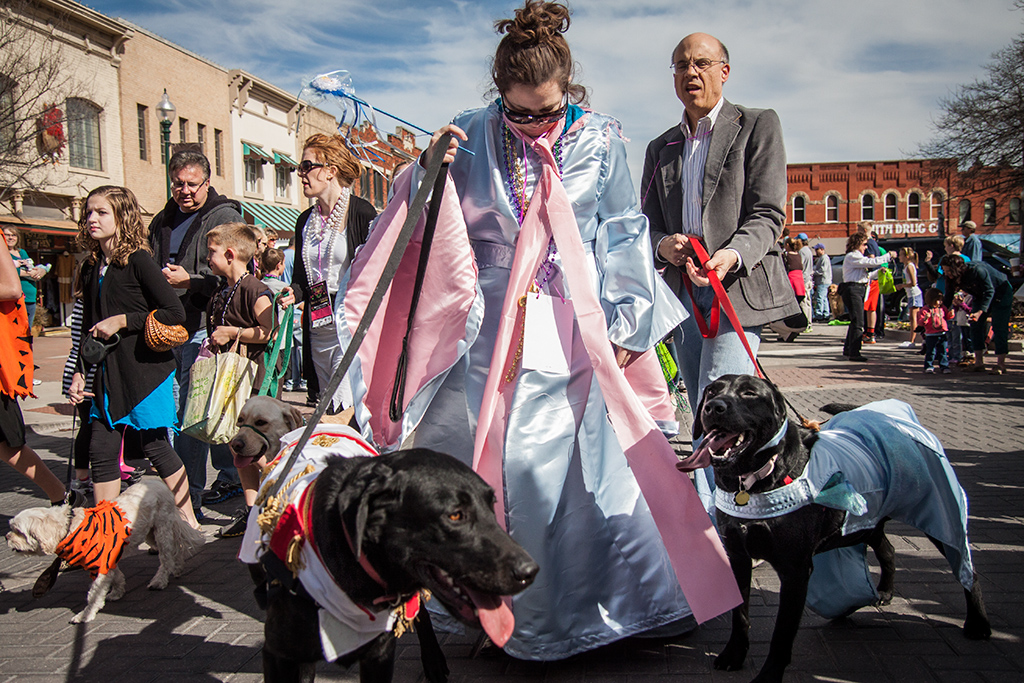
Krewe of Barkus Parade in McKinney

State of the Union

   The fog of chatter about Federal Reserve money-printing shenanigans, currency wars, fiscal intransigence, exchange rates, and alphabetized rescue operations conceals the central reality of the historical moment: that all industrial economies now face epic contraction, even rip-roaring China in its absurd and spectacular bid to become the latest drive-in utopia. The so-called advanced nations of the world are all sliding toward something less than they wish to be, and the so-called developing nations will backslide further into poverty and anarchy where development will never happen. 

     The implacable contraction underway is the simple result of growing scarcity of cheap oil, the master resource. Thus, in a world where fantasy has replaced analysis, the propaganda channels brim with false news of America's coming "energy independence" and the rebirth of domestic manufacturing, the coming electric car fleet, and space tourism. There is also chatter among the paranoid that an imagined elite has deliberately engineered American collapse for fun and profit, with sideshows about the Department of Homeland Security promoting social upheaval in order to make a show of putting it down. This is all bullshit concealing the futile machinations of people so unfortunate as to hold political office in an unraveling they can't control. Where control is no longer possible, paranoid fantasies fill the vacuum of wishing for control.
 
     One thing you can be sure of: the current sociopolitical weather will change. A front will blow through and sweep the fog away. So many circles of hazard are spinning around events that some fast-turning object will come off its axis and start smashing all the fantasies. When that happens, it will be every community for itself, and where there are no real communities -- for instance, the vast matrix of suburban noplaces that America emergently composed itself out of in a tragic quest to become its own televised fantasy -- we'll discover the dark side of the "liberty" that so-called conservatives endlessly invoke, in all its screaming eagle iconography.
 
    Not since the Civil War (1861 - 65) has anything bad of this scale happened within the United States itself and the public is unprepared despite our total immersion in the on-screen ersatz heroics of avatars such as Dwayne Johnson. The terrible convulsion of the 1860s was preceded by a political time much like ours is now, with figures (calling them leaders is inaccurate) of no conviction backpedaling furiously toward strife.
 
     Remember these things if you tune in to watch President Obama move his lips on Tuesday amid the incessant applause in the House chamber. He'll speak the words "climate change" and the hall will rock with thunderous handclapping -- but it won't mean anything because both the president and the people have no intention of changing the way we live. Mr. Obama will cheerlead for economic growth and he will be talking out of his ass. It's the nature of this contraction that economic growth is absent. You can have plenty of economic activity -- especially if you re-form (literally) the systems we depend on, such as farming, commerce, medicine, and transportation -- but it won't be expressed favorably in the GDP stats or the balance sheets of CitiGroup and Morgan Stanley.
 
     At the core of this contraction is the disappearing act of real capital -- that is, accumulated wealth -- for the excellent reason that we are squandering what remains of it in the futile effort to keep living the way we do. But it will be vanishing fast, contrary to the view of such fantasists as David Leonhardt, Washington bureau chief of The New York Times -- catch him on the current Slate Political Gabfest -- who thinks that the Growth Fairy is about to land on the south lawn of the White House.
 
     The State of the Union Address is happening in a peculiar quiet moment when all the financial brushfires of the time have been reduced temporarily to a smolder that conceals the full involvement of the roots under the surface. Our economic system is burning down. Nobody wants to talk about the system that will have to replace it, which I call a world made by hand.
 
     The fortunate few will be those who have already established themselves in an authentic community of helping hands, who have some tools -- and I don't mean Adobe Photoshop or the latest iPhone app -- and laid in some bits of silver and gold.

Sunday, February 10, 2013


Krewe of Barkus Parade in McKinney, 2/10/2013...

Monday, February 04, 2013

Cattle Drive

      How hilarious is the Federal Reserve's cattle drive of cash money (i.e. "liquidity") into the stock markets? I'll tell you: if that cash is outflow from bonds that pay ZIRP interest rates, then this attempt to stampede investment into the stock market is only going to succeed in ravaging the bond market and by extension the credibility of the dollar, the US banking cartel, and then the world financial system as a whole. 
 
     If bond-dumpers rush into stocks, then who are the next bond buyers at ZIRP? The USA can't keep going without continuous bond selling. Somebody has to buy the darn things. The Federal Reserve is now buying around 70 percent of US issue -- a lot of it via secondary market pass-thru shenanigans involving "Primary dealers" (a.k.a. Too Big To Fail banks, who get to cream off a premium when they flip bonds to the Fed -- tidy little racket). If the other 30 percent of issue can't find willing buyers at ZIRP then interest rates will have to go up. If interest rates go up, then interest paid out on bonds (that is "debt service") by the US government will go up catastrophically, because the aggregate debt is so colossal and most of the debt is short term, meaning that in a post-ZIRP world the interest rate ratchets up automatically every 13 weeks as bonds roll over. The US will then only be able to pretend that it can service the debt at higher interest rates. Everybody in the world will recognize this -- surely only increasing the velocity of the stampede away from bonds. The question is: how long can pretending to service debt go on before it is just called by it's real name: default? Or, if countered with additional furious computer "money" creation: hyperinflation? Either way, of course, you end up broke.
 
     This cattle drive into stocks is strictly a political gambit. The cattle are being driven to the slaughterhouse. It's discretionary strategic national financial suicide. They're driving up the stock markets for cosmetic purposes, to make it appear that an economic recovery is going on, and with the aim of setting in motion a self-reinforcing financial feeding frenzy in this rush to "equities." By the way, in case my manner seems didactic today I am attempting to define my terms as I go along because most other financial bloggers seem to assume that ordinary people understand all their jargon, which I am quite sure they do not.
 
     Returning to my point... the Fed and their auditors on Wall Street and in government, are jacking up the stock markets in the hopes of stirring up "animal spirits," as the financial psychologists say, to put over the story that it equals a vibrant economy -- which is nonsense, of course, to anyone who shoots a casual glance at the economic wreckage all around them. Anyway, since the stock market action these days is dominated by high frequency trading robots running on algorithms, where exactly would animal spirits even factor in? If anything the absence of real animal spirits in this action also implies the absence of its counterpart, animal survival instinct, of which human intelligence is an order. What can come of stirring up animal spirits among robots? A train wreck is exactly what.
 
     Now, I ask you: at a moment in history when vast interlinked global financial markets have never been so unstable, so primed for unintended consequences courtesy of the diminishing returns of technology, so ripe for a massive, cascading "accident," is it a prudent thing to fuck around with such crude PsyOps?
 
      One other factor outside pure financials assures that US economic performance will remain impaired (that is, the kind of economic activity we regard as "normal" (suburban sprawl building, credit card "consumer" spending): the price of oil, which is inching up to the $100-a-barrel hashmark. Apparently that shale oil bonanza we hear so much about has not left the USA swimming in cheap oil. As a general principle, it's probably safe to say that an oil price above $80 crushes the US economy. It drives up the cost structure of just about everything we make, do, or sell here, but of course the primary things that go up in price are food and motor fuel.
 
     Hence, it's tragically ironic that -- getting back to official financial PsyOps -- that one of the primary motives for the Fed keeping interest rates super-low in the first place (apart from enabling wild fiscal irresponsibility in government) has been to promote the housing sector -- because in the reality of our time "housing" translates into building more suburban sprawl. How smart is it to promote more suburban sprawl at a moment in history when there's no more cheap oil?
 
     It is this kind of stupendous foolishness that is putting the USA on the path of an epochal systemic collapse.

Superbowl addendum:
Did anyone notice how violent and psychotic the Superbowl advertising was this year? An Oreo commercial that depicted a mob of nerds destroying a library --  huh? The Doritos spot where "Daddy" and his male buddies transform themselves into an insane clown posse of cross-dressers. The Fast and Furious 6 trailer featuring the destruction of every vehicle known to man and a few office buildings, too. The third-quarter power failure was a neat harbinger of things-to-come in the Most Exceptional United States of America. Party on, peeps!
 

Saturday, February 02, 2013


Kiran shooting flowers the old fashioned way...

Up @ Turner Falls, OK

Monday, January 28, 2013


The Master Meme


     The gentlemen and ladies of the meme-o-sphere, where collective notions are birthed like sleet from clouds, have decided lately that the USA has entered a full-on broad-based bull market - a condition of general happiness and prosperity as far advanced beyond mere "recovery" as a wedge of triple-cream Saint-Andre cheese is advanced over a Cheez Doodle. It has become the master fantasy of the moment, following the birth of some junior memes such as... we have a hundred years of shale gas and the "housing sector" (i.e. the suburban sprawl-building industry) is "bouncing back." What a sad-sack nation of credulous twits we have become.

     You can be sure that when a nation is led by the reality-deficient, unhappy outcomes are a sure thing. They will systematically destroy trust in the way things actually work and beat a fast path to either tyranny (where reality doesn't matter) or anarchy (where reality cannot be managed at all). This is what happens when nations go mad. Even when they are led by people later-determined to be "evil" (Hitler, Lenin) this sad process is allowed to happen because it just seems like a good idea at the time - which is the central political tragedy of human history. To the beaten-down Russians, Bolshevism seemed like a good-idea at the time. To the bankrupt, hopeless Germans, Naziism seemed like a good idea.

     I'm not even sure what to call the current disposition of unreality in the USA, though it is clearly tinged with different colors of grandiosity ranging from the plain dopey idea of "American exceptionalism" to the wishful claim that we're about to become "energy independent," to the lame assertion so popular in presidential addresses that "together we can do anything." Speaking of the inaugural, in all the Second-Coming-of-Lincoln-Meets-MLK hoopla of the grand day, with the national mall lined by gigantic flat screen TVs (an Orwellian nightmare), and the heartwarming displays of ethnic diversity, and the stridently inoffensive songs and poem, there was the genial Mr. Obama at the epicenter of the huge ceremony delivering a bouquet of platitudes so stale and trite that it could have been composed in a first-year Harvard Law School ethics skull session at a back table of Wagamama. Despite all the blather about his graying hair, and the wisdom of age, and the supposed music of his rhetoric, I couldn't detect a single idea in Mr. Obama's inaugural address that wasn't either self-evident, or devised to flatter some "identity" bloc, or an imitation of old tropes out of the "Great Speeches" book.

     What's obvious to me is what I have been fearing about this country for some time now: that all the disorders of our time would prompt a campaign to defend the status quo at all costs and to sustain the unsustainable. That is really the master wish behind all the political hijinks of the day, especially the pervasive accounting fraud in all high-order money matters. We see the comforts and conveniences of modernity slipping away and we'll do anything to try to hang onto them, including lying to ourselves to such an immersive degree about what is really happening that we suppose we can manufacture a happy counter-reality. That's at the heart of zero interest rate policies, and Federal Reserve manipulation of markets, and statistical misreporting from all the national agencies charged with adding things up. So, the Fed pumps its $90 billion-a-month and the Standard & Poor's index inflates like an old tire while ten thousand more families get added to the food stamp rolls, and the banks sit on enough foreclosed property to fill the state of Indiana, and another 25-year-old college loan debt serf ODs on vodka and Xanax because he finally understands that even bankruptcy will not save him from perpetual penury.

     Apparently, there are moments in history when nations just get lost. I maintain that things would go a whole lot better for us if we acknowledge what is actually going on, namely: a major shift of direction into economic contraction after 200-plus thrilling years of expanding energy resources and easy-to-get material riches. It's in the nature of this world that things cycle and pulse, and we have entered a certain phase of the cycle that demands certain responses. We have to make the scale of human activities smaller, finer, simpler, and more rooted to the local particulars of place. We have to let go of WalMart and globalism and driving cars incessantly and attempting to manage the affairs of people half a world a way... and we just can't imagine engaging with this endeavor. That is true poverty of imagination.

Friday, January 25, 2013


Up in Durant OK...

Wednesday, January 23, 2013

Commitments and Obligations

         
     Conservatives have a legitimate gripe about America's excessive "commitments and obligations" to "unfunded liabilities" but their focus on Medicare and social security misses the larger point: our disastrous commitment to the current national lifestyle, in particular suburban sprawl and everything it entails.
 
     This point came across vividly in a video recently released by the usually level-headed David McAlvaney titled "The Fuse Is Lit Part 3 - an American Reckoning." In it, the smooth and articulate McAlvaney is shown behind the wheel of his SUV tooling across the picturesque small town in Colorado where he lives inveighing against the public that elects politicians who deliver the voters cash benefits. This dynamic is surely deadly, and implies Democracy's tragic self-limiting nature. But McAlvaney suggests if we could come to grips with the fiscal quandary of "entitlement" spending, American life would just rock on. 
 
     This is plainly not so, but it also reveals the tragic shortsightedness of even thoughtful conservatives - and there are some out there, indeed we need them, indeed one of the political tragedies of recent American history is the surrender of conservatism to religious hysterics, professional ignoramuses, military chauvinists, and flat-earthers. A true conservative would recognize the land development pattern of the millennial USA as a consequence of tragic collective choices, a living arrangement with no future, a trap every bit as lethal as Medicare and social security.
 
     The catch is, we're not going to unbuild suburbia and all its accessories. There's no way to legislate it away. We're stuck with it. The suburban entitlement will fail even more dramatically than the social entitlements that conservatives grouse about because there's no way to "print" cheap oil or well-paid livelihoods the way you can monetize public debt to support social spending. You can "print" mortgages, of course, for people with little chance of paying them down, but that only leads to the financial hostage racket called too-big-to-fail banking, and we know where that's gotten us.
 
      Around the Internet, in the vale of financial podcasting, you can hear voices cheerleading the "return" of the house-building industry. Is it a good thing that real estate speculators are banging up yet more housing subdivisions in the hills around San Diego? I can tell you why they are doing it: because that is the only way they know how to build anything in California. They're stuck in the habits and practices of the 20th century, building more car dependent stuff for a society that is already dying a slow death from living that way.
 
     In the collapse of all these rackets, bad habits, and brain-dead behaviors that is sure to come, historians will have a hard time sorting out what exactly brought down the empire. The big element that will not be so visible is the poverty of imagination that set the tone for it - especially among public figures and spokespeople who should have seen and articulated these relationships, and extra-especially among self-proclaimed conservatives.
 
     This happens to be the day when the articulator-in-chief gets his official new lease in office. Genial figure that he is, I don't think President Obama has a clue where all this is heading. I suppose he'll argue for stricter gun laws today, but that horse is already so far out of the barn it's in the next county. We don't seem to realize that America is now fully armed. Additional firearms are just superfluous at this point. And to some degree the people armed themselves in direct consequence as their government tinkered with due process, and sent drone aircraft into the American skies, and commenced computer hacking operations over every business transaction in the system, and voided the rule-of-law against criminal uber-bankers who creamed off the nation's wealth while holding the economy hostage. Since the armed public is not ready to mount an insurrection against this impudence, the dangerous tension is expressed in morbid and tragic episodes of mass shootings by maniacs against the innocent. What I want to know: where is the lone swindled rancher who waits to bushwhack Jon Corzine of MF Global in the parking lots of Easthampton, since the law won't touch him?
 
     I suppose we'll hear about immigration reform today. It will surely be some cockamamie proposal to legitimize the "undocumented" by shanghaiing them into the military (think: mercenaries), and otherwise keeping the welcome mat down for more newcomers waiting politely at the front door. This is insane, of course. The USA needs to reduce its population consistent with the tremendous economic contraction underway world-wide. There are too many people for the world to support and shifting them into this country from regions more rapidly affected by contraction is just dumb -- but we have our cultural myths to defend... and voting blocs to appease.
 
     It seems obvious to me that in the, say, four years ahead (one presidential term), we will not come to grips with any of the forces of reality bearing down on us. We will lose control of the money system; we'll go broke trying to keep up our oil supplies; the American public will get more economically desperate and angry; and pretty soon the practical matters of daily life will become rather harsh. And at that point faith in the system finally evaporates and people fight over the table scraps of a failed polity.
 
     Many of us around the country are hoping for a better outcome in the successful downscaling and re-localizing of American life, but those questions are just not in the arena. Hence, the arena itself will probably have to topple and crash before life is reorganized outside of where it used to stand.
 

Monday, January 14, 2013


Going To the Movies


I don't go to the movies much anymore, alas, because the nearest mall cineplex -- owned by a company named Regal that runs the place like a self-storage facility -- is a dump with broken seats and teenage employees who forget to turn out the lights when the movie starts. But the weekend weather here was sloppy, and this is the movie awards season, and I wanted to get an idea of what Hollywood thinks America is about these days, so I hauled my carcass over to see Django Unchained andZero Dark Thirty, in that order.
     Years ago I rather admired Tarantino's Pulp Fiction for its rococo storytelling method and comic expansiveness. The sheer volume of gore and mayhem strained my suspension of disbelief, but I was charmed by the audacity -- for instance the scene where a character played by Quentin himself repeats to the two hit men with a dead body that he's not in the business of "dead nigger storage," which was in there, I'm sure, just to rub a lot of sanctimonious minds the wrong way.
     Django Unchained is something else: perhaps the most incoherent movie ever made, but in a way that nicely represents the culture that it comes out of. For the uninitiated, the movie tells the tale of a slave named  Django ("the D is silent," actor Jamie Foxx informs another character) rescued from a slave coffle by a German bounty hunter named Schultz posing as an itinerant dentist. Together they ride forth to slaughter white people involved in the slavery business to 1) make a lot of money off bounties, 2) free Django's captive wife Broomhilda, and 3) enjoy many acts of bloody revenge.
     What you notice right away is that the filmmaker has no sense of American history or geography. One moment you're in the Sonoran Desert, the next moment the Montana Rockies. Huh? Of course the line on Tarantino by film savants is that hisweltanschauung is a gleeful composition of movie history pastiche. That is, his ideas come only from other movies (or television), not from the so-called real world and the record of goings-on there. So in this case they are derived from previous movies made by earlier auteurs who got the details wrong about mid-19th century life. That may be so, but the difference is that the earlier movie directors, however mis-educated or befuddled by convention, might have cared about the milieu they attempted to represent. Tarantino is content to be wildly wrong about just about everything. Or rather, the details don't matter as long as the fantasy satisfies portions of the brain where ideas are not processed.
     What interests me about all this is how perfectly Tarantino's mental universe reflects the current situation in our nation, in particular the infantile disregard for the facts of life, the self-referential inanity of our culture, and the complete absence of authenticity in anything. What disturbed me about the movie was the sense that Tarantino has set the table for race war, like a jolly arsonist playing with matches and gasoline in a foreclosed house. He won a Golden Globe award for directing last night.
     Zero Dark Thirty tells the tale of a CIA unit based in Pakistan and its laborious efforts to track down Osama bin Laden, perpetrator of the 9/11 airplane attacks on the USA and other misdeeds. It focuses on the doings of a female American agent, uncelebrated in the annals of this long, strange "War on Terror," who pored over the minutiae of cell phone records for a decade before locating the messenger who led CIA watchers to bin Laden's hideout in Abbottabad, where Navy SEALs finally sent him to his eternal reward of feasts and virgins.
     The movie, directed by Kathryn Bigalow, is a bloodless recounting of some very grim and bloody business from recent history. The controversy around it comes from the extensive scenes of "extreme interrogation" carried out by American officials against captured jihadists in "dark" locations. Critics have objected to the movie's lack of a moral position about these brutal activities. Was it right? Was it wrong? The movie simply asserts that it happened that way. Some politicians have objected as to whether the depiction of all these matters is correct in the first place. Nor is the killing of bin Laden treated as an occasion for fist-pumping histrionics. If anything, the event leaves you with a hollow feeling and a bad taste for the time we live in. I admired especially - for the first time in many a movie - the absence of techno-triumphalism involving computers.
     The contrast between the two movies is extremely interesting to me: Tarantino the populist, shall we say, reveling in a splatter-film Americana with barely a tenuous connection to reality, either historical, cultural, or emotional; and the assiduous Bigalow laying out the very serious business of capable adults engaging with a world that consistently terrifies and disappoints. Kathryn Bigalow didn't win an award for directing at the Golden Globes.

Friday, January 11, 2013


Along the riverfront outside of Uncertain TX...